
APPLICATIONS
Car parks and traffic areas. Protection under load.
In a car park, both watertightness and how the surface is used matter. We select the layer build-up to suit the substrate, traffic type, drainage and the facility's service conditions.
01 / HOWLER
Traffic, water and details in one system.
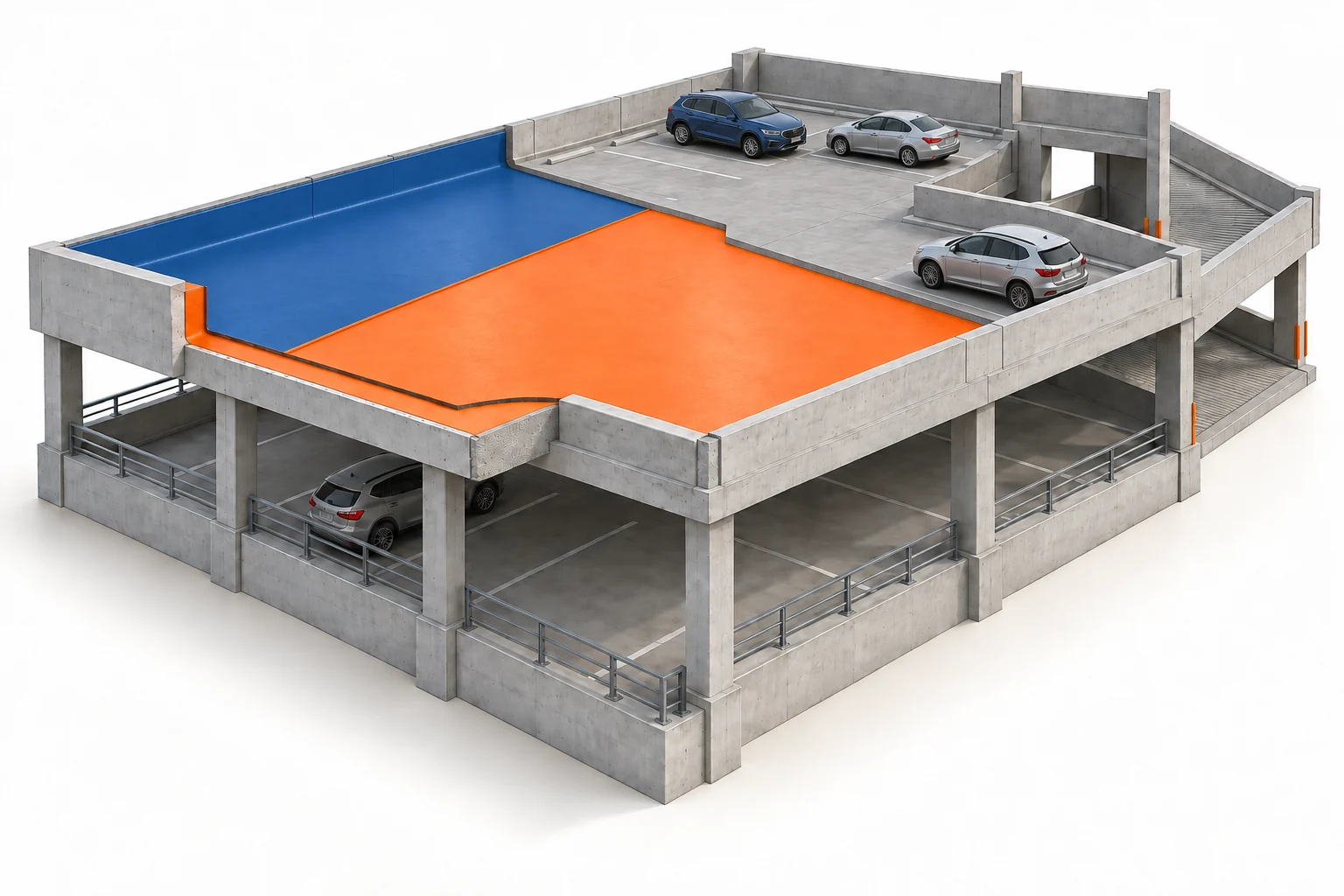
In parking areas, the system is selected according to the traffic load and waterproofing needs. We establish requirements for the wear layer, anti-slip texture and marking. Drainage and wall connection details are part of the solution, as is finish compatibility with the membrane.
Before selecting a solution, we establish whether the surface is exposed or covered, what traffic it carries and the condition of the existing layers. Turning and braking areas, and joints between different parts of the structure, require separate assessment.
02 / HOWLER
A wearing course selected for the surface.
The membrane and finish each serve defined functions within the selected build-up. We verify requirements for wear resistance, slip-resistant texture, markings and sun exposure for the specific system.
A coating does not replace effective drainage, repairs to a weak substrate or correctly detailed movement joints. We plan surface preparation and treatment of these areas before application.
Substrate preparation and polyurea spraying03 / HOWLER
Installation and reopening the car park.
We agree the scope, phasing and access arrangements for each facility. The time before traffic can resume depends on the materials, application conditions and the loads the surface will need to carry.
Explore polyurea membranes04 / HOWLER
Describe your car park or traffic area.
Send the location, approximate area, photos of the substrate and details, and information about the type of traffic. Drainage drawings, a description of existing layers and requirements for maintaining access during the work will also help.
Discuss protection for your car park